

0. Category:
Weight Loss, Metabolic Health, Energy Optimization, Anti-Aging / Longevity
1. Primary Research Use:
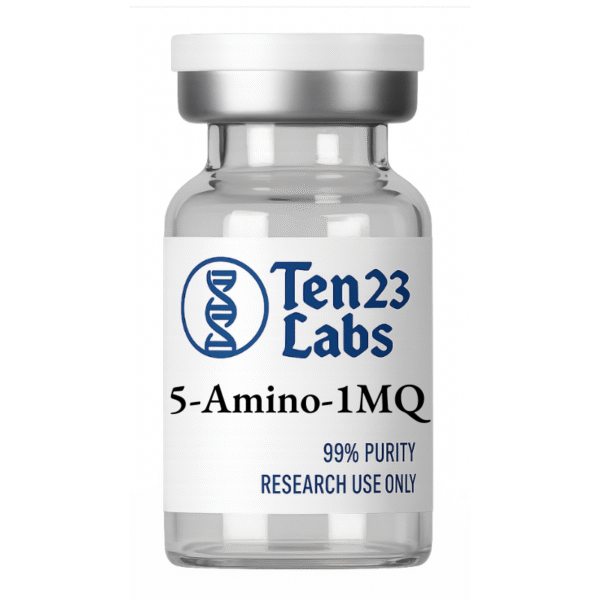
5-Amino-1MQ is a small-molecule NNMT inhibitor primarily researched for its ability to reverse metabolic slowdown, a hallmark of aging and obesity.
Its core research purpose is to restore youthful metabolic function inside fat cells, increasing energy turnover and improving the way the body manages calories and lipids.
Researchers study 5-Amino-1MQ for its potential in:
-
Increasing basal metabolic rate
-
Reducing adipocyte (fat cell) size
-
Enhancing NAD+ availability
-
Improving mitochondrial activity
-
Supporting metabolic flexibility during energy demands
-
Counteracting age-related metabolic decline
In preclinical models, blocking NNMT shifts cells out of “energy conservation mode” and into a more active, calorie-burning state.
2. Simple Analogy:
Imagine your fat cells are tiny engines.
Over time, an enzyme called NNMT acts like sludge in those engines—slowing them down, reducing efficiency, and causing them to store more fuel (fat) instead of burning it.
5-Amino-1MQ works like a professional-grade engine flush.
It clears out that metabolic sludge, allowing the engines (fat cells) to:
-
Burn cleaner
-
Run faster
-
Use more energy
-
Stop hoarding fuel
In other words, it tells your fat cells to stop being lazy and start acting like they did when you were younger.
3. What It Is (Chemical Summary):
5-Amino-1MQ is a synthetic small-molecule inhibitor of nicotinamide-N-methyltransferase (NNMT), an enzyme that becomes increasingly active with age and in metabolic disorders.
Key chemical actions:
-
Blocks NNMT activity
-
Prevents excessive methylation of nicotinamide
-
Increases intracellular NAD+ availability
-
Enhances metabolic gene expression associated with energy turnover
-
Supports healthier mitochondrial function
Unlike peptides that act on hormonal receptors, 5-Amino-1MQ operates directly inside the cell, adjusting metabolism at the enzymatic level.
4. Best Suited For:
Research focused on:
-
Obesity and fat mass reduction
-
Restoring metabolic activity in aging models
-
NAD+ preservation and energy balance
-
Adipocyte signaling pathways
-
Insulin sensitivity and glucose use
-
Mitochondrial health and bioenergetics
Scientists studying NNMT’s role in metabolic slowdown often use 5-Amino-1MQ to better understand how inhibiting this enzyme affects cellular energy dynamics.
5. Not Recommended For / Caution In Research With:
Research considerations include caution in subjects with:
-
Cardiovascular disease
-
Active cancer (due to metabolic pathway involvement)
-
Significant liver or kidney impairment
-
Blood sugar instability
-
Pregnancy or lactation
NNMT is involved in multiple cellular pathways, so monitoring metabolic markers is standard when this molecule is used in research.
6. Synergistic Peptide & Molecule Stacks:
Common research combinations include:
-
MOTS-c – Enhances mitochondrial efficiency and exercise capacity; strong synergy for energy output.
-
Tesamorelin + Ipamorelin – Supports lean mass retention and increases fat mobilization.
-
BPC-157 – May help offset inflammation or tissue stress during metabolic shifts.
-
NAD+ Precursors (NMN/NR) – Stack well due to 5-Amino-1MQ’s role in preserving NAD+ pools.
Together, these molecules help researchers explore multi-angle metabolic enhancement.
7. Common Dosing Guidelines (Research Use):
| Experience Level | Common SC Dose Range |
|---|---|
| Beginner | 0.25–0.5 mg/day |
| Intermediate | 0.5–1.0 mg/day |
| Advanced | 1.0–2.0 mg/day |
Typical SC Research Frequency
-
Once daily injection
-
Some protocols explore every other day due to its metabolic half-life.
These doses are based on preclinical metabolic research where 5-Amino-1MQ is delivered via injection to bypass first-pass metabolism and achieve more stable plasma levels.
8. Cycling Information:
Research cycles typically follow:
-
6–12 weeks of active study
-
2–4 week assessment phase
-
Optional longer-term continuous models based on goals
Starting at lower doses and increasing slowly can improve tolerability, particularly when assessing metabolic markers.
9. Similar Molecules & Comparison Chart:
| Molecule | Duration | Mechanism of Action | Dosing Frequency | Notes |
|---|---|---|---|---|
| 5-Amino-1MQ | Medium (hours) | NNMT inhibitor → ↑NAD+ & ↑metabolic rate | 1x/day | Targets metabolic slowdown at the cellular engine level |
| AOD-9604 | Short (hours) | Fragment of HGH (C-terminal) → ↑lipolysis, ↓lipogenesis | Daily (SC) | Targets fat breakdown without HGH’s growth or IGF-1 effects; excellent for fat loss models. |
| MOTS-c | Medium | Mitochondrial regulation → ↑fat oxidation | Daily (SC) | Strong energy and performance synergy |
| GLP-1s | Long | Appetite & glucose signaling | Weekly (SC) | Works through hunger signaling rather than cellular metabolism |
10. Method of Administration:
5-Amino-1MQ is typically administered orally in capsule or solution form, or subcutaneous, depending on the research design.
Bioavailability may vary based on formulation, so protocols often include absorption studies.
11. Regulatory Status (FDA Approval):
5-Amino-1MQ is not FDA-approved and is not recognized as a dietary supplement.
It is an investigational small molecule used for research purposes only in cell, animal, and metabolic pathway modeling.
12. Legal Disclaimer:
All products discussed are intended for laboratory, scientific, and research purposes only. These products are not approved by the FDA for human or veterinary use and are not intended to diagnose, treat, cure, or prevent any disease. They must not be used for any form of medical application or personal use.
The information presented is for educational purposes only and is not medical advice. Always consult a licensed healthcare professional before making decisions regarding your health.
By accessing or purchasing these materials, you affirm that you are a qualified researcher or are acting under the supervision of one. All sales are final.

Reviews
There are no reviews yet.