
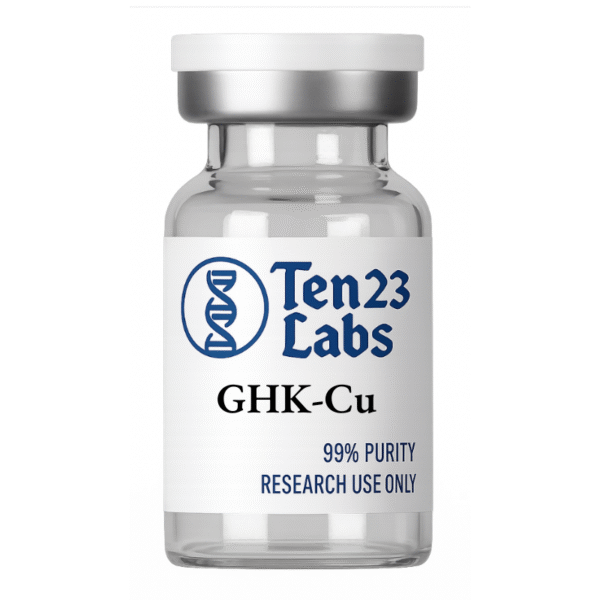
🧬 GHK-Cu (Copper Tripeptide-1) – Research Overview
0. Category:
Skin & Aesthetic, Healing & Recovery, Anti-Aging / Longevity, Hair Regeneration, Inflammation Control
1. Primary Research Use:
GHK-Cu is primarily researched for its ability to stimulate tissue repair, collagen synthesis, and cellular regeneration. It plays a significant role in wound healing, anti-aging skin rejuvenation, and hair follicle stimulation. Studies also indicate antioxidant, anti-inflammatory, and DNA-protective effects, making it a core peptide for cellular restoration and skin longevity research.
2. Simple Analogy:
Think of GHK-Cu as the body’s renovation crew and blueprint restorer—it rebuilds the structural framework of tissues (collagen, elastin, and blood vessels), clears away damaged materials, and directs new growth for smoother, stronger, and more youthful skin and connective tissue.
3. What It Is (Chemical Summary):
GHK-Cu is a naturally occurring tripeptide composed of glycine-histidine-lysine that tightly binds a copper ion. Discovered in human plasma, saliva, and wound fluid, it serves as a biological signaling molecule that triggers regenerative processes. The copper complex version (GHK-Cu) is more stable and bioactive than the unbound form, supporting angiogenesis, collagen synthesis, and antioxidant defense.
4. Best Suited For:
This peptide is widely studied in contexts of skin repair, hair regrowth, post-injury recovery, and aging-related tissue decline. It’s particularly well-suited for research focused on:
-
Improving skin elasticity and firmness
-
Reducing fine lines, wrinkles, and discoloration
-
Accelerating wound and scar healing
-
Supporting hair follicle health and growth
-
Enhancing cellular longevity through antioxidant signaling
5. Not Recommended For / Caution In Research With:
Caution is advised in individuals with:
-
Copper metabolism disorders (e.g., Wilson’s disease)
-
Pregnancy or breastfeeding, due to limited data
-
Active infections or severe inflammatory skin conditions, which may alter absorption or local responses
6. Synergistic Peptide Stacks:
-
BPC-157 – Complements tissue regeneration and wound healing at the muscular and connective level.
-
TB-500 (Thymosin Beta-4) – Enhances angiogenesis and systemic repair alongside GHK-Cu’s localized action.
-
KPV – Adds anti-inflammatory support to improve recovery of irritated or inflamed skin.
-
GLOW or KLOW blends – Often include GHK-Cu as the cornerstone of their skin and tissue rejuvenation formulas.
7. Common Dosing Guidelines (Research Use):
| Experience Level | Common Dosage Range | Application Method |
|---|---|---|
| Beginner | 2–5 mg daily | Topical or subcutaneous |
| Intermediate | 5–10 mg daily | Topical, microneedling, or SC |
| Advanced | 10–15 mg daily | SC injection or high-density skin application |
Topical formulations often range 0.1–2% GHK-Cu, while injectable research doses generally fall in the 2–10 mg range per day.
8. Cycling Information:
Research protocols typically employ 4–8 week cycles, with visible improvements in skin texture and hair growth appearing within weeks. Continuous low-dose use is common in long-term skin rejuvenation and anti-aging studies.
9. Similar Peptides & Comparison Chart:
| Peptide | Mechanism of Action | Primary Focus | Dosing Frequency | Notes |
|---|---|---|---|---|
| GHK-Cu | Binds copper, triggers collagen and tissue regeneration | Skin repair & anti-aging | Daily | Improves elasticity, firmness, and healing |
| BPC-157 | Angiogenesis & tissue healing | Gut & soft tissue repair | Daily | Best for tendon, ligament, and gut health |
| TB-500 | Actin regulation & cell migration | Systemic recovery | 2–3×/week | Promotes healing and flexibility |
| KPV | Anti-inflammatory signaling | Skin and immune modulation | Daily | Reduces irritation & supports healing |
10. Method of Administration:
-
Topical or transdermal: Often used in cosmetic research for skin or hair regeneration.
-
Subcutaneous injection: Common in systemic regenerative studies.
-
Microneedling / mesotherapy: Enhances delivery into dermal layers for collagen induction.
11. Regulatory Status (FDA Approval):
GHK-Cu is not FDA-approved for therapeutic use. It is classified as an investigational compound available for research purposes only. It is used in some cosmetic formulations, but its clinical efficacy claims remain under investigation.
12. Legal Disclaimer:
All products discussed are intended for laboratory, scientific, and research purposes only. GHK-Cu is not approved by the FDA for human or veterinary use and is not intended to diagnose, treat, cure, or prevent any disease. It must not be used for any medical application or personal use.
The information provided is for educational purposes only and not medical advice. Always consult a licensed healthcare professional before making health or research decisions.
By accessing or purchasing these materials, you affirm that you are a qualified researcher or are acting under the supervision of one. All sales are final.

Reviews
There are no reviews yet.